
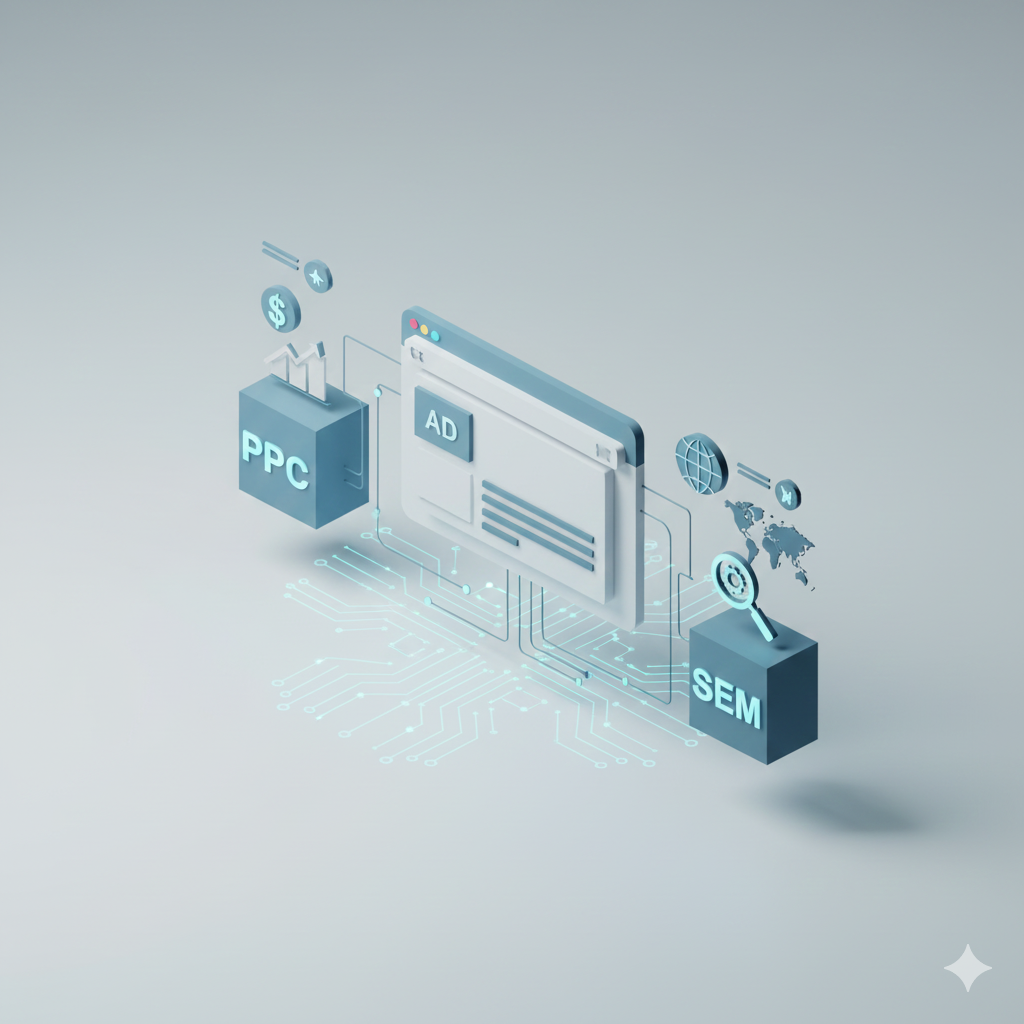
The Key Differences Between PPC and SEM Strategies
We get a lot of questions concerning PPC (Pay Per Click) and how it relates to SEM (Search Engine Marketing).
PPC and SEM can seem the same, but you will see key wins for each in online marketing when you use them well. Specifically, PPC means you pay for each click in “search” or on “ad sites”. SEM uses paid ads with SEO as one broad plan to raise site reach and bring in more leads.
Both can drive traffic, but their cost plans and reach can change a lot based on your goals and your strategy. If you’re weighing your next step, it’s smart to sort out how SEM isn’t just PPC before you pick where to invest your money.

SEM and PPC Definitions
The term SEM means methods that help your business get seen in search engine results. It uses paid and unpaid tactics. SEM is most often tied to paid plans, and you use PPC as a key part, where you pay for each click.
SEO is another SEM plan that drives traffic using unpaid listings, but it takes up less space. There’s only small room for organic results on Google, so your SEM plan often focuses more on PPC. The main difference is that PPC means only paid ads, while SEM is the broad plan that mixes paid with organic work.
In addition, research from Search Engine Land in 2023 showed over 61% of marketers find PPC brings the fastest results. To learn more about the SEM and PPC difference, we will show you how these plans work together but are NOT the same.
Compare Cost Structures and Budgets
Advertisers set budgets for SEM and PPC in very different ways. You may see PPC as a quick way to get traffic since you pay for each click. SEM is more broad. It covers paid ads AND organic search, so your SEM cost can shift with SEO work, new content, and ad campaigns.
PPC costs can rise really fast, most of all in packed markets where keyword prices soar past $5 per click, per Search Engine Journal. Their teams focus on bid tweaks and keep ad spend in check. You face obvious risk in PPC.
Clicks can drain your monthly budget in days if you’re not keeping an eye on it. The cost for SEM can be easier to spread out over time as work like SEO brings gains even after the first push. So, you have to choose the right mix. You want your money to work hardest for your brand goals.
Evaluate Targeting and Reach Differences
Is it hard to know who sees your ads? The main gap is reach, and with SEM you use paid ads and SEO so you show up more across search. With PPC, your ads reach only people who match settings like location, search habits, or device use.
The real catch is in the layers, as each one has its own aims. There are over 200 rank factors in organic search, so SEM casts a wider net, but PPC lets you set rules with pinpoint aim. SEM can help your site show up for lots of “like searches” over time.
You may want both scale and full control, but no one plan is perfect. In fact, we have seen clients reach 65% more unique searchers within two months with mixed SEM plans than with PPC alone.
SEM covers paid and organic search, while PPC means only paid online ads for search. Both target search users. Yet SEM helps you show up more with a mix of tools. Meanwhile, PPC gives you faster results, and it’s easier to track your spending (again, it demands constant monitoring).
In addition, top SEM plans can blend PPC with SEO to help you grow over time. Our team at NūbizSoho.com will help you pick the right mix for your goals. Reach the right people at the most relevant touch-points with our Multi-Channel (PPC and SEM) Marketing Solutions.
Contact us to fine-tune your plan to boost results for increased revenue.